Why Are My Clear Roof Sheets Cracking?

Clear roof sheets can crack for several reasons, and the pattern of damage often gives an indication of what has gone wrong. Splits around screws may point to restricted movement or over-tightened fixings, while cracks along edges or between supports can be linked to flexing, poor support or impact. Older sheets may also become brittle and less able to cope with normal expansion, weather and maintenance activity.

The cause is worth checking before simply sealing the crack or replacing one panel. Where the same problem appears across several sheets, or new cracks keep developing after repairs, the issue may involve the installation, support or overall condition of the roofing rather than one isolated area. A closer inspection can help determine whether the cracked polycarbonate roof sheets are locally damaged or part of a broader failure pattern.
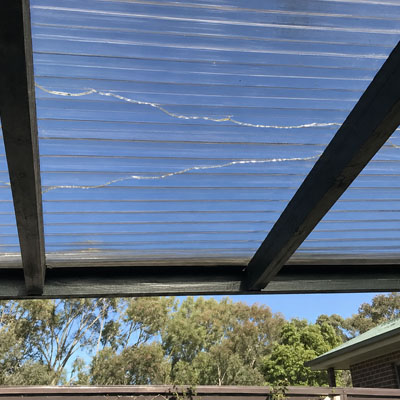
Cracks Around Screws and Fixing Points

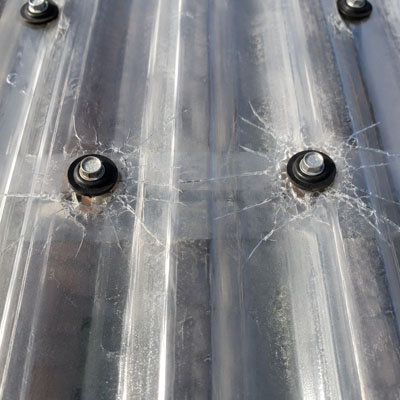
Cracks that begin around screws often indicate that the sheet has not been able to expand and contract freely as temperatures change. If fixing holes are too small, screws are positioned poorly or the fixings have been tightened too firmly, stress can build around each penetration instead of being absorbed through normal sheet movement.

This can produce small splits radiating from the screw hole, which may gradually extend further across the sheet. Polycarbonate roofing installation instructions generally require clearance around fixing points to allow for thermal movement and caution against fixings that restrict the sheet. Where similar cracks appear around several screws, the pattern may point to an installation issue rather than isolated impact damage.

Why Are My Clear Roof Sheets Cracking - Cracks forming around screws

Poor Support and Movement Across the Sheets

Clear roof sheets rely on correctly spaced battens or purlins to limit flexing across the material. When the distance between supports is too wide, the edge overhang is excessive or the underlying frame moves, the sheets can bend repeatedly under wind and changing temperatures. This may lead to cracking between supports, along unsupported edges or near end laps. Manufacturer installation guides set maximum support spacing and overhang limits according to the sheet profile and product being installed.

Unlike cracks that radiate directly from a screw hole, support-related clear roof sheet damage may follow a broader line across the sheet or appear in similar positions over several panels. The support layout, sheet profile, overhang and condition of the underlying frame should all be considered before treating the damage as an isolated crack.

Why Are My Clear Roof Sheets Cracking - Cracks forming between support

Age, Sun Exposure and Brittle Clear Roof Sheets

Polycarbonate can gradually lose flexibility after years of sun and heat exposure. As the material becomes more brittle, it is less able to absorb impact or cope with everyday movement without splitting. Older sheets may begin cracking from relatively minor stress that would not have damaged them when they were newer.

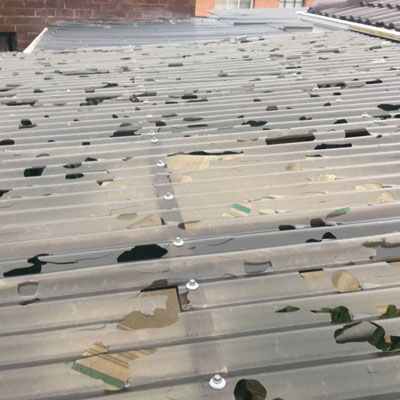
Age-related deterioration may also appear as yellowing, clouding, fine surface crazing or chipped edges alongside the cracks. Where several panels show these changes, the problem is more likely to involve brittle clear roof sheets than one isolated area of damage. In that situation, replacing a single cracked polycarbonate roof sheet may leave other weakened panels likely to fail later.

Why Are My Clear Roof Sheets Cracking - Brittle polycarbonate sheet

Impact, Cleaning Products and Other Sources of Damage

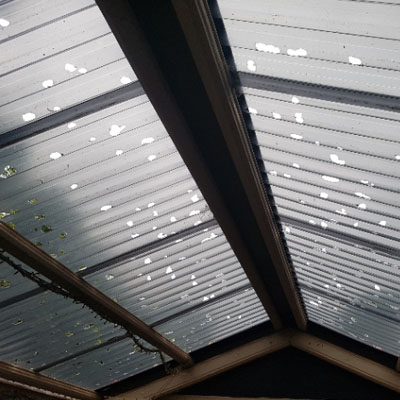
Clear roof sheets can also crack after a direct impact or accidental damage during maintenance. Hail, falling branches, dropped tools or someone placing weight on an unsupported section can create fractures that spread beyond the original contact point. Common sources of damage include:

  • Hail or storm debris
  • Falling branches
  • Foot traffic or misplaced ladders
  • Abrasive or unsuitable cleaning products
  • Sealants or chemicals that are incompatible with the sheet material
Why Are My Clear Roof Sheets Cracking - Damaged clear roof sheets

Impact damage is often concentrated in one area, while chemical damage may appear as fine cracking, clouding or weakening around repaired or cleaned sections. Checking when and where the damage first appeared can help separate accidental clear roof sheet damage from cracking caused by installation or ageing.

When Cracked Sheets Need Repair or Replacement

Whether cracked clear roof sheets can be repaired depends on the extent of the damage and the condition of the surrounding material. A small, isolated crack in an otherwise sound sheet may be treated differently from damage that extends through several panels, affects multiple fixing points or allows the sheets to lift and move. Repairs are also less likely to provide a lasting result where the polycarbonate has already become brittle.

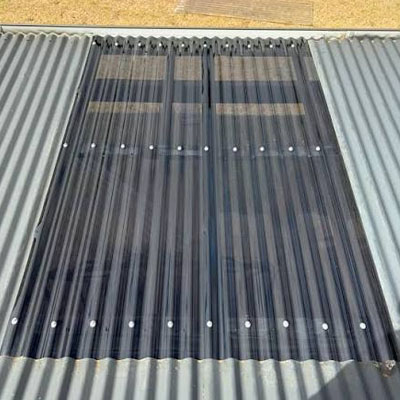
Replacement may be the more practical option when cracks continue spreading, water is entering through several areas or the sheets no longer sit securely against the supporting frame. A polycarbonate roof sheet inspection can document the location and pattern of the damage, helping determine whether the problem is limited to one section or whether several sheets are approaching the point where replacement should be considered.

Why Are My Clear Roof Sheets Cracking - Replacement of clear roof sheeting

Book a Roof Inspection for Cracking Clear Roof Sheets

When clear roof sheets are cracking in several places, splitting around fixings or becoming brittle, a roof inspection can help establish how widespread the damage is and whether the surrounding installation may also be contributing. The condition of the supports, fixings, joins and remaining sheets can all affect whether a local repair is likely to hold or replacement should be considered.

Roof Inspection Reports provides independent roof condition reports across South-East Queensland. Call 0418 677 524 or click here to contact our team online and arrange an inspection.

FAQ: Clear Roof Sheets Cracking

Cracks around screws usually develop when the sheets cannot move freely as temperatures change. Fixing holes that are too small or screws that are tightened too firmly can concentrate stress around the fixing point.

Small, isolated cracks may sometimes be repaired, but the result depends on the condition of the surrounding material. Repairs are less likely to last where the sheets have become brittle or the cracking is linked to poor support or restricted movement.

Long-term exposure to sun and heat can gradually reduce the flexibility of polycarbonate sheets. Older material may then crack under stress that would not have damaged it when it was newer.

Where cracking appears across several sheets, replacing only one panel may not address the broader problem. The remaining sheets, fixings and supports should be assessed before deciding how much roofing needs replacement.

A roof inspection can document the crack pattern, fixing points, support layout and overall condition of the sheets. This can help distinguish between isolated impact damage, ageing and problems with the installation.