Solar Panel Installations and Hidden Roof Deterioration

Solar panel systems now cover large sections of residential roofs across Queensland, providing long-term energy benefits while changing how roof surfaces are exposed and maintained. Once panels are installed, significant portions of the roof become partially or fully concealed, limiting visibility and reducing natural drying in some areas. As a result, hidden roof deterioration can continue developing beneath panel arrays without obvious external warning signs.

Because these covered areas are rarely viewed during routine checks, early coating wear, moisture retention, fastener stress, and surface breakdown can go unnoticed for years. In many cases, problems are only discovered when corrosion, leaks, or structural concerns have already progressed. Clear awareness of how solar installations affect roof monitoring helps identify concealed roof wear before it leads to more serious deterioration.
Why Solar Panels Limit Early Problem Detection

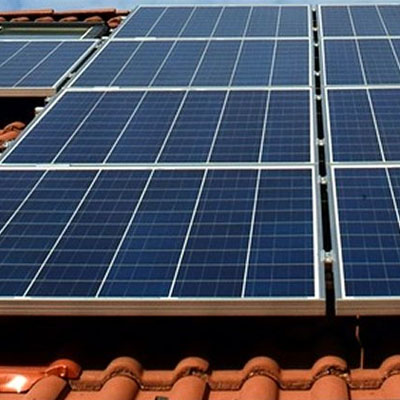
Once solar panels are installed, large sections of the roof surface become difficult to access and inspect. Mounting rails, panel frames, and electrical components sit directly over roofing materials, blocking clear lines of sight and restricting physical access. This makes routine visual checks far less effective, particularly in areas where early surface changes would normally be noticed.

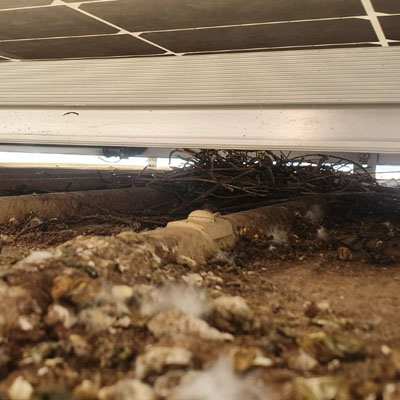
Solar systems also alter airflow and drying patterns across the roof. Shaded zones beneath panels retain moisture for longer after rain, while reduced exposure limits natural evaporation. Over time, this creates conditions where coating wear, corrosion, and fastener stress can progress quietly beneath the array. Because these changes are hidden from view, concealed roof wear often develops without triggering early warning signs that would otherwise prompt investigation.

Solar Panel Installations and Hidden Roof Deterioration

Coating and Surface Wear Hidden Beneath Panels

Areas beneath solar panels experience different exposure conditions compared to open roof surfaces. Reduced sunlight, limited airflow, and trapped debris alter how coatings age and how moisture behaves over time. While these sheltered zones may appear protected, they often develop uneven wear patterns that remain unnoticed until panels are removed or inspected closely.

  • Uneven coating ageing caused by irregular exposure and restricted drying.
  • Debris accumulation along panel edges and rails that increases surface abrasion.
  • Moisture retention in shaded areas that slows evaporation after rainfall.
  • Accelerated wear near mounting rails where movement and friction occur.
  • Localised corrosion zones forming where coatings thin beneath fixings.
  • Patch breakdown patterns that differ from surrounding exposed surfaces.

These hidden changes can progress for years without visual confirmation from ground level. When surface deterioration develops beneath solar arrays, it often reaches an advanced stage before detection, increasing the risk of broader roof damage if left unaddressed.

Moisture and Condensation Trapped Under Solar Systems

Solar panel arrays change how heat and moisture move across the roof surface. Shaded areas beneath panels remain cooler during the day and warmer at night compared to exposed sections, creating temperature differences that encourage condensation. When warm, moist air meets cooler roofing surfaces under the panels, water droplets can form and linger rather than evaporate quickly.

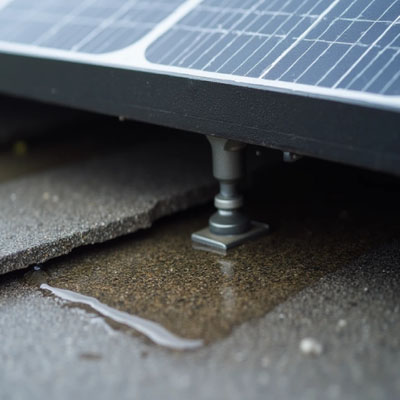
Restricted airflow also slows the drying process after rain or high humidity. Moisture that enters through minor surface gaps, fastener points, or airborne condensation can remain trapped against coatings and metal for extended periods. Over time, this persistent dampness contributes to corrosion, coating breakdown, and timber deterioration beneath the array. Because these moisture cycles occur out of sight, they are a common contributor to hidden roof deterioration in solar-equipped homes.

Water trapped beneath solar panel on roof surface

Mounting Hardware and Fastener Stress Points

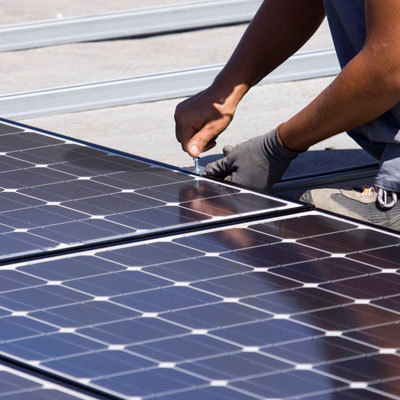
Solar mounting systems introduce new load paths and restraint points across the roof surface. Brackets, rails, and fixings transfer panel weight and wind forces directly into the roofing structure, creating localised stress zones that did not exist before installation. These concentrated loads increase movement around penetrations and fixing points, particularly during strong winds and temperature changes.

  • Bracket penetration points where seals and washers are placed under constant compression.
  • Rail expansion zones where thermal movement is transferred into roof fixings.
  • Washer degradation caused by sustained pressure and limited drying.
  • Localised uplift forces acting on fasteners near panel edges.
  • Seal compression loss around mounting hardware over time.
  • Accelerated fastener fatigue in areas carrying combined roof and panel loads.
Hidden roof condition issues associated with solar panel mounts

While mounting systems are engineered to withstand these forces, long-term exposure can still affect surrounding roofing materials. Without regular assessment, stress-related wear around solar hardware can progress quietly and contribute to concealed roof deterioration.

Drainage Disruption Caused by Panel Layout

Solar panel arrays alter the way rainwater moves across the roof surface. Rails, frames, and panel edges interrupt natural runoff paths, creating new flow patterns that concentrate water in certain areas. Instead of spreading evenly, water may be redirected toward specific laps, fixings, or valleys, increasing surface wear in those zones.

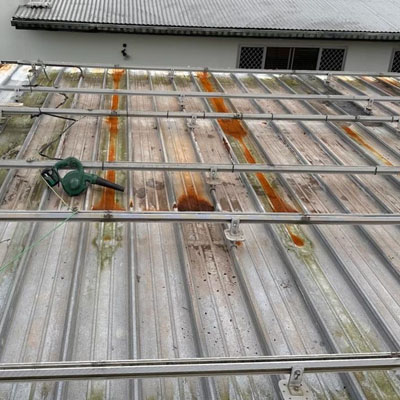
These altered drainage paths can also create “shadow zones” where water lingers after rainfall. In these areas, reduced sunlight and airflow slow evaporation, allowing moisture to remain in contact with coatings and metal for longer periods. Over time, this extended wetting contributes to uneven coating breakdown and corrosion beneath panels. Because these drainage changes are hidden from view, their effects often develop unnoticed until more advanced deterioration is present.

Roof corrosion developing under solar panel array

Ageing Roofs and Solar Retrofits

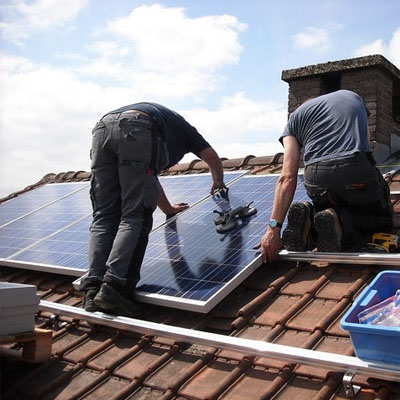
When solar systems are installed on older roofs, existing wear patterns can continue developing beneath the panels. Coatings may already be thinning, fasteners may have begun loosening, and underlays may be approaching the end of their service life. Once these areas are covered, natural drying and visual monitoring are reduced, allowing pre-existing deterioration to progress more quickly and less visibly.

  • Pre-existing coating wear that continues beneath shaded areas.
  • Early corrosion sites that expand without exposure-driven drying.
  • Ageing underlays that retain moisture for longer once airflow is reduced.
  • Structural fatigue in battens and framing supporting added panel loads.
  • Mixed material compatibility issues between older roofing systems and newer mounting hardware.
  • Deferred maintenance zones that become inaccessible after installation.

Installing solar on a roof that is already showing age-related wear does not cause immediate failure, but it can shorten the time before deeper issues appear. Evaluating roof condition before and after retrofitting helps manage hidden roof deterioration more effectively.

Solar panel installation revealing underlying roof deterioration

What Roof Inspections Assess Beneath Solar Installations

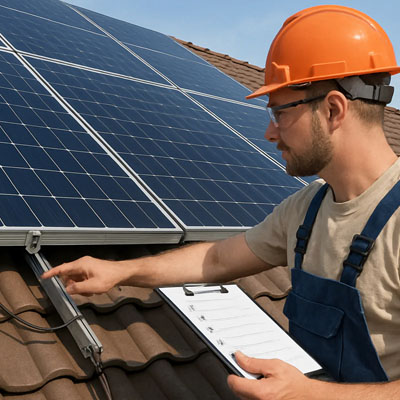
Inspecting roofs that carry solar systems requires a different approach to standard surface checks. Because large sections are concealed, inspections focus on exposed transition zones, drainage paths, mounting points, and areas where deterioration is most likely to progress unseen. Attention is given to coating condition near rails, corrosion around fixings, moisture indicators beneath panels, and signs of uneven movement across covered and uncovered sections.

A roof condition report documents these findings in context, recording where wear is advancing and how it relates to panel layout and mounting design. This documentation also helps establish condition history, which can be valuable if deterioration later becomes part of maintenance planning or insurance assessment. By mapping concealed and visible wear patterns together, inspections provide clarity on whether hidden roof deterioration is stable or progressing.

Roof condition report identifying hidden deterioration beneath solar panels

Managing Hidden Deterioration Before It Escalates

Hidden roof deterioration beneath solar installations is easiest to manage when it is identified early, before corrosion, coating failure, or structural wear becomes widespread. Monitoring changes around exposed edges, drainage points, and mounting hardware helps indicate whether concealed areas may also be deteriorating. Addressing minor surface breakdown and moisture retention at this stage can reduce the likelihood of more extensive repairs later.

If you are unsure whether concealed deterioration is developing beneath your solar system, an assessment provides clarity before secondary damage occurs. At Roof Inspection Reports, we document surface wear, mounting stress, and moisture indicators within a roof condition report, supporting maintenance planning and future insurance discussions. Call 0418 677 524 or click to call to arrange an inspection and protect your roof from hidden deterioration before it becomes a larger problem.

FAQ: Solar Panels and Hidden Roof Deterioration

Solar panels do not automatically damage roofs when installed correctly, but they can conceal existing wear and change how moisture, heat, and stress affect roofing materials.

Yes. Reduced airflow and prolonged moisture retention beneath panels can encourage corrosion and coating breakdown over time.

Yes. An inspection helps confirm that coatings, fasteners, and underlays are in suitable condition before being covered by a solar system.

They can. Leaks and moisture pathways may remain concealed beneath panels until staining or internal damage becomes visible.

Periodic inspections are recommended, particularly after severe weather or as the roof ages, to assess concealed and exposed areas.

In most cases, inspections focus on accessible areas and pattern analysis. Partial removal is only considered when hidden deterioration cannot be assessed otherwise.