Coating Breakdown Patterns That Signal Deeper Roof Problems

Roof coatings are designed to weather first, which makes surface change one of the earliest indicators of deeper roof issues. Long before corrosion, leaks, or structural problems become obvious, coatings begin to show subtle shifts in colour, texture, and reflectivity. These changes are often dismissed as cosmetic ageing, yet the way a coating breaks down can reveal how the roof beneath is coping with exposure, moisture, and long-term stress.

Roof coating breakdown rarely occurs at random. Patterns such as chalking, surface thinning, uneven dulling, and early rust bloom tend to develop in predictable ways based on exposure, water flow, and material interaction. When these patterns are assessed together rather than in isolation, they provide valuable insight into roof surface deterioration and help identify whether the roof is entering an early stage of broader decline.
Why Roof Coatings Deteriorate Before the Roof Structure

Roof coatings act as the first line of defence against environmental exposure, which means they absorb the majority of stress long before the roof structure is affected. Constant ultraviolet exposure breaks down pigments and binders within the coating, while daily heat cycles cause repeated expansion and contraction at the surface. Over time, this weakens the coating’s ability to protect the layers beneath it, even though the underlying metal or substrate may still appear sound.

Airborne contaminants, salt, dust, and moisture also contribute to gradual coating failure. As these elements settle on the roof surface, they accelerate abrasion and chemical breakdown, particularly in areas where water lingers or runoff concentrates. Because coatings are sacrificial by design, their deterioration often signals changing conditions at the roof surface rather than immediate structural damage. Interpreting this early coating breakdown correctly allows deeper roof problems to be identified before corrosion or material loss begins.

Coating Breakdown Patterns That Signal Deeper Roof Problems

Chalking Patterns and What They Reveal

Chalking is one of the most common and misunderstood forms of roof coating breakdown. It occurs when ultraviolet exposure breaks down the binder in the coating, releasing fine pigment particles that sit loosely on the surface. While chalking is often treated as simple ageing, the pattern and distribution of chalk residue can reveal a great deal about exposure levels and surface stress across the roof.

  • Uniform chalking across open roof planes usually indicates consistent UV exposure and gradual coating ageing rather than localised failure.
  • Heavier chalking near ridges and north-facing slopes reflects increased sun exposure and higher surface temperatures.
  • Chalk build-up near laps, ribs, or gutters often points to runoff concentrating pigment residue as water moves across the roof.
  • Uneven chalking between adjacent sheets can indicate differences in installation age, coating thickness, or shading.
  • Powder transfer onto gutters, downpipes, or nearby surfaces confirms active pigment breakdown rather than surface dirt.

On its own, chalking does not mean a roof is failing. However, when chalking appears uneven, accelerates rapidly, or aligns with known water paths, it can signal that the protective layer is thinning faster in certain areas. Reading these patterns correctly helps distinguish normal coating ageing from early-stage roof surface deterioration.

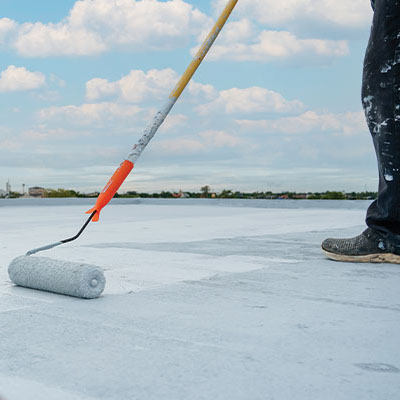
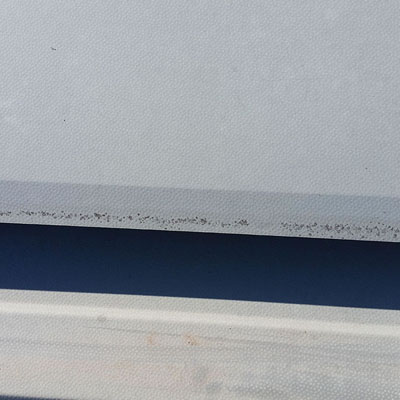
Chalking and thinning revealing loss of roof surface protection

Surface Thinning and Loss of Protective Layer

Surface thinning occurs as the outer layer of the coating is gradually worn away by heat, abrasion, and repeated weather exposure. Unlike chalking, which leaves visible residue, thinning is often harder to spot because the coating may still appear intact at a glance. Over time, however, reduced thickness limits the coating’s ability to shield the substrate from moisture, contaminants, and temperature stress.

Thinning typically shows first in areas subject to higher wear, such as along water flow paths, near fixings, and across exposed roof planes. As the coating loses depth, underlying primer layers may begin to show through, and colour consistency can change subtly across the surface. These early signs of roof surface deterioration indicate that protection is diminishing, even though corrosion has not yet formed. Identifying surface thinning at this stage helps assess whether the roof is approaching a point where deeper issues are more likely to develop.

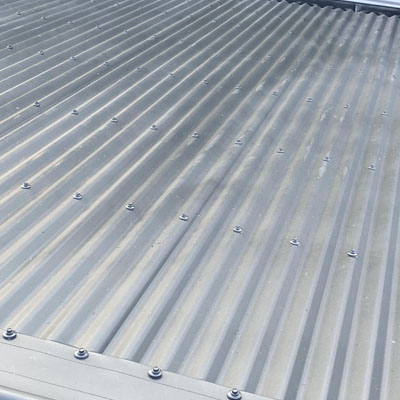
Uneven roof coating deterioration across metal panels

Patchy Dulling and Uneven Weathering

Patchy dulling occurs when sections of the roof lose their original sheen at different rates. Rather than fading evenly, the coating develops irregular areas where reflectivity drops and the surface looks flat or lifeless. This uneven weathering is often linked to variations in exposure, water movement, and surface stress rather than simple age.

  • Localised dull patches around fasteners where movement and heat concentrate wear.
  • Striping or streaking along water flow paths where runoff accelerates surface erosion.
  • Dulling near laps and overlaps where moisture lingers longer after rainfall.
  • Flattened areas around rooftop equipment or penetrations due to shading, heat build-up, or disrupted airflow.
  • Visible contrast between shaded and fully exposed sections showing how exposure affects coating longevity.
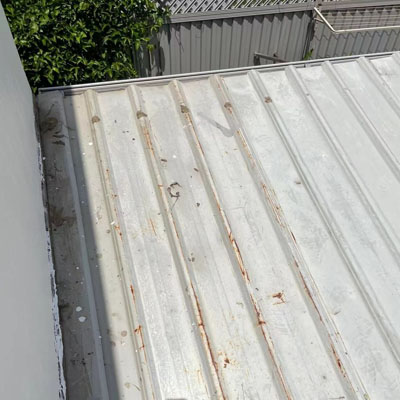
Patchy roof weathering aligned with water flow paths

Patchy dulling is rarely just cosmetic. These uneven zones often mark areas where the coating is thinning faster and protection is reducing unevenly across the roof. When dulling aligns with known stress points, it can signal developing coating breakdown that may progress to corrosion if left unchecked.

Early Rust Bloom and What Comes Next

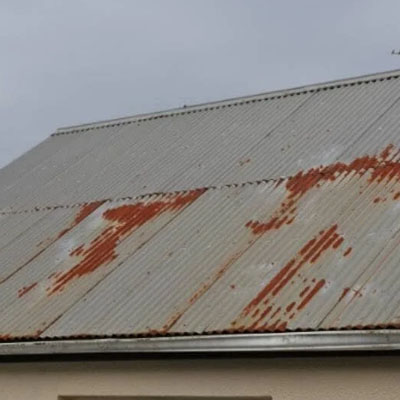
Early rust bloom appears when the protective coating has thinned or breached enough for moisture and oxygen to reach the metal surface. It often presents as light discolouration or small rust marks rather than deep pitting or flaking. At this stage, corrosion is typically superficial, yet it signals a clear shift from coating deterioration to metal exposure.

Rust bloom tends to form first at edges, fixings, and areas where water sits or moves slowly across the surface. These locations experience greater stress as coatings wear and moisture lingers longer after rain. While early rust bloom does not mean immediate structural damage, it marks the point where coating breakdown is no longer acting alone. Without attention, these small corrosion points can expand, leading to deeper metal loss and broader roof corrosion patterns over time.

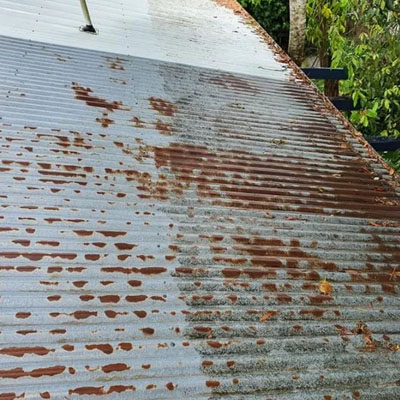
Early rust bloom forming where roof coatings have failed

How Breakdown Patterns Progress Over Time

Coating deterioration tends to follow a recognisable sequence rather than occurring all at once. Early changes at the surface often set the conditions for the next stage of wear, with each phase making the roof more vulnerable to the one that follows. When these patterns are viewed across the whole roof, they help indicate whether deterioration is isolated or developing system-wide.

  • Chalking appears first as binders break down and pigment is released under prolonged UV exposure.
  • Surface thinning follows as erosion and abrasion reduce the protective depth of the coating.
  • Uneven dulling develops where exposure, water flow, or movement accelerates wear in specific zones.
  • Rust bloom emerges once the coating no longer fully isolates the metal from moisture and air.
  • Localised corrosion expands as affected areas retain moisture and protection continues to decline.
  • Pattern repetition occurs across similar roof sections, confirming exposure-driven deterioration rather than isolated damage.
Metal roof inspection highlighting progressive coating failure

Recognising where the roof sits within this progression helps determine urgency and scope. Early-stage patterns often allow for proactive assessment, while later stages indicate that deeper roof problems may already be developing beneath the surface.

What a Roof Inspection Looks for in Coating Wear

During a roof inspection, coating wear is assessed as a pattern rather than a single defect. Inspectors compare exposed and sheltered areas, track water flow paths, and look for consistency in chalking, thinning, and dulling across similar roof sections. Attention is given to transitions such as laps, ridges, valleys, and fixing points, where coating breakdown often progresses faster due to combined exposure and movement.

A roof condition report documents where protective layers are diminishing and whether corrosion sequences are beginning to form. By recording the extent, location, and stage of coating breakdown, the inspection provides context on how far deterioration has progressed and which areas are most vulnerable next. This approach helps distinguish surface ageing from early indicators of deeper roof problems, allowing informed decisions before structural damage develops.

Assessment of coating wear patterns indicating progressive roof issues

Acting on Coating Breakdown Before Structural Damage Occurs

Surface coating changes are easiest to address when they are identified early, before corrosion spreads beyond isolated areas. Tracking where chalking intensifies, where thinning is most advanced, and where dulling aligns with water flow helps prioritise attention and avoid broader deterioration. Acting at this stage can limit further coating loss and reduce the likelihood of metal exposure becoming a structural issue.

If coating breakdown patterns are developing across your roof, an assessment provides clarity on what those surface changes indicate. At Roof Inspection Reports, we document coating wear stages, map exposure patterns, and record early corrosion sequences within a roof condition report. Call 0418 677 524 or click to call to arrange an inspection and address roof coating breakdown before deeper roof problems take hold.

FAQ: Roof Coating Breakdown and Surface Wear

No. Chalking is a normal part of coating ageing, but uneven or accelerated chalking can indicate areas where protection is diminishing faster than expected.

Yes. Coatings can lose thickness and protective capacity long before corrosion becomes visible, particularly along water flow paths and exposed areas.

Patchy dulling does not automatically mean failure, but it often highlights zones of higher wear where breakdown is progressing unevenly.

Early rust bloom shows that the coating barrier has been breached in small areas, allowing moisture and oxygen to contact the metal surface.

They can be either. Repeating patterns across similar roof sections often point to exposure-driven deterioration rather than isolated defects.

Yes. A roof inspection assesses coating condition, wear patterns, and early corrosion stages to determine whether surface breakdown is likely to lead to deeper roof problems.